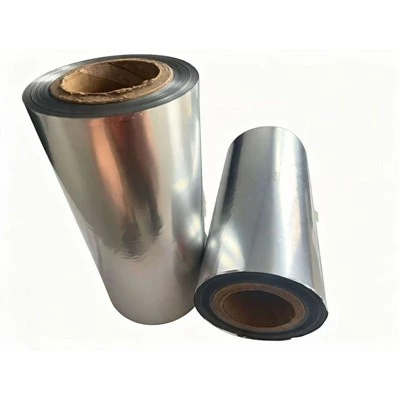


Physicochemical Properties Of Biaxially Oriented Polyester Film
Leave a message
Biaxially oriented polyester film (BOPET) offers excellent overall performance. Regarding mechanical properties, it boasts high tensile strength-three times that of PC or nylon films-and an impact strength three to five times that of BOPP film; it exhibits good abrasion, folding, pinhole, and tear resistance, with an elastic modulus exceeding 4000 MPa. Thermally, it shows minimal shrinkage (only 1.25% after 15 minutes at 120°C) and is suitable for long-term use between -70°C and 150°C; even after heating in air at 125°C for 1,000 hours, its tensile strength and elastic modulus decrease by only 10%–15%. Optically, it features high light transmission (up to 90%) and low haze. In terms of barrier properties, its water vapor transmission rate is extremely low-comparable to that of low-density polyethylene (LDPE)-and its permeability to air and odors is minimal; second only to polyamide, it is an excellent material for aroma retention. Electrically, it exists in an amorphous glassy state at room temperature, making dipole orientation difficult and resulting in excellent electrical insulation. Chemically, it withstands dilute acids and alkalis but is susceptible to concentrated acids and alkalis; it shows good resistance to most solvents, oils, and fats, though it is not resistant to nitrobenzene, chloroform, or benzyl alcohol. Regarding surface properties, corona treatment can raise the surface wetting tension to over 50 mN/m (or 52 dyn/cm), while the coefficient of friction is typically controlled between 0.4 and 0.6.
Standard BOPET film lacks heat-sealing capabilities and requires lamination with films such as PE or CPP. However, heat-sealable BOPET films can be produced through copolymerization modification of the PET resin (e.g., creating APET or PETG), achieving heat-seal strengths of 5–8 N/15mm. In 2024, a company obtained a patent for a "high-strength, high-barrier, heat-sealable BOPET film" by laminating surface and base layers and incorporating materials like graphene oxide, thereby enhancing the material's stability, mechanical properties, and UV-blocking capabilities. Due to the presence of polar groups in its molecular structure, BOPET film can achieve a surface tension exceeding 50 mN/m (or 52 dyn/cm) after corona treatment, which is advantageous for printing and lamination. When BOPET film is laminated with other heat-sealable materials (such as CPP film) to manufacture bags, it does not melt or deform even when exposed to heat-sealing bar temperatures as high as 220°C, thereby facilitating a smooth bag-making process. To determine the heat shrinkage rate, the BOPET film is placed in a constant-temperature oven at 160°C for 5 minutes; changes in length and width are then measured to calculate the longitudinal and transverse shrinkage rates. These rates should generally be less than 1.5% (testing has shown that the shrinkage rate can be as low as 1.25% after 15 minutes at 120°C).