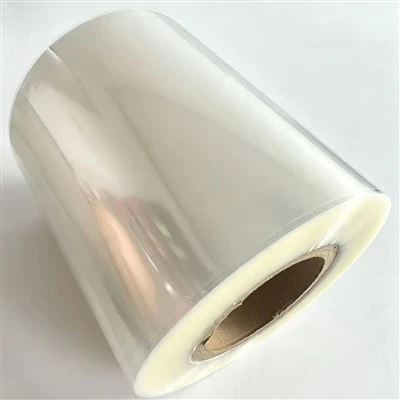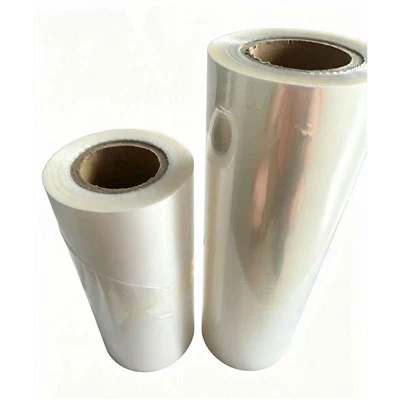


Attention, CPP cast film manufacturers! If wavy edges appear on the film, the issue might not be the die—it could be the bearings!
Leave a message
What is the biggest nightmare once a CPP (Cast Polypropylene) production line starts up? First, unplanned downtime; second, oil leakage; and third, uneven film thickness. Many equipment managers have thoroughly inspected the die head and process parameters, only to discover the culprit was a tiny bearing. Today, let's discuss the "troublesome" operating conditions of CPP lines and how to avoid the pitfalls associated with them.
CPP Film
The "Devilishly" Tough Operating Conditions of CPP Lines
If you think a bearing just needs to spin to do its job, you are bound to run into trouble on a CPP line. The bearings here endure extreme thermal contrasts every day:
Thermal expansion and contraction at the chill roll:
The chill roll is crucial for setting the CPP film's shape. On one side, there is molten polymer at over 200°C; on the other, cooling water flows inside the roll. This temperature difference causes the bearing housing and the shaft to have vastly different thermal expansion rates, making standard bearings prone to seizing up due to expansion.
High speed with zero runout:
Modern production lines often run at speeds of 300 m/min or more. Even the slightest bearing runout results in uneven film thickness-or in severe cases, "wavy edges" (ruffled edges).
Protection against electrical discharge:
At the downstream corona treatment station, if the high-voltage electric field isn't properly isolated, the current can arc directly onto the bearing raceway, creating "washboard-like" patterns.
Three Common Pitfalls in Bearing Selection
Pitfall 1: Buying standard clearance bearings to save money
Many purchasers, unfamiliar with the specifics, install bearings with standard internal clearance (CN) on chill rolls. Once the cooling water flows, the shaft contracts while the outer ring remains heated; the internal clearance instantly drops to zero, causing the bearing to overheat and seize within hours.
Pitfall 2: Improper grease usage
Under high temperatures, the grease thins out and leaks onto the film. For food packaging film, even a tiny amount of oil contamination means the entire roll must be scrapped, resulting in huge losses.
Pitfall 3: Ignoring "electrical erosion"
Abnormal noise in the corona roll bearing; upon disassembly, the surface of the rolling elements looks corroded. This is a classic case of electrical breakdown; simply replacing standard bearings frequently won't solve the problem.
Expert Advice on Avoiding Pitfalls
To ensure production line stability, select bearings based on these standards:
1. Opt for "C3/C4" Large Internal Clearance
For rapid-cooling and preheating rollers, you must use bearings with C3 or C4 large internal clearance. This accommodates the thermal expansion and contraction of the metal, preventing the bearing from seizing up internally.
2. Highly Recommended: "Solid Oil" Technology
Worried about oil leakage? "Solid Oil" bearings are the solution. The lubricant is stored within a porous polymer matrix; it does not flow when heated and cannot be flung out by centrifugal force. This completely eliminates oil leakage contamination on the film and offers a lifetime, maintenance-free service.
3. Use "Insulated Bearings" for Corona Stations
For corona rollers, use insulated bearings or ceramic ball bearings. Although they cost a bit more, they effectively block shaft currents and offer a service life 3 to 5 times longer than standard bearings.
4. Upgrade to P5 Precision Class
To ensure film flatness, it is recommended to upgrade the bearings in the casting section to P5 precision class, thereby minimizing roller runout.
Summary
In the competitive market for CPP cast film, success often hinges on the details. Choosing the right bearing not only saves on maintenance costs but also helps ensure consistent product quality.