

The Development History of Cast Polypropylene Film
Leave a message
Getting Started
According to industry insiders, the global market for packaging materials is witnessing a steady rise in cast film production, and the cast film industry is entering a new wave of investment. Production of cast film in my country began in the 1980s; following two decades of continuous growth and expansion, it has become a thriving sector within the packaging industry, boasting significant production capacity and technical capabilities.
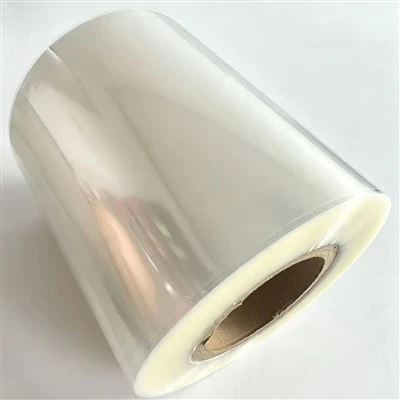
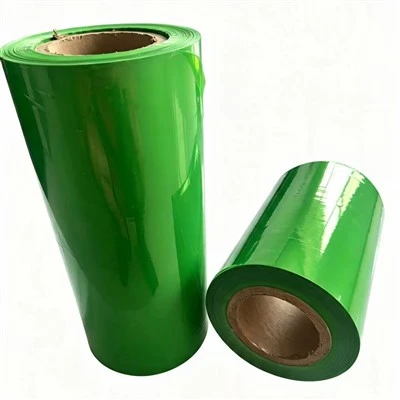
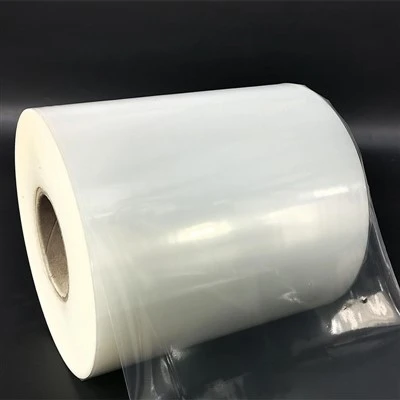
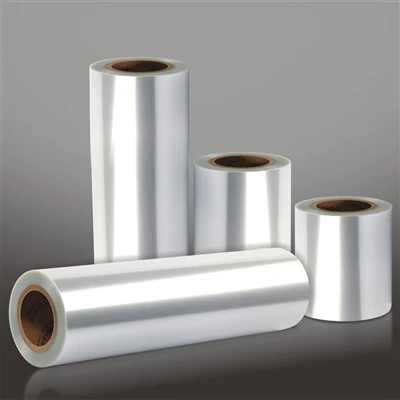
Cast polypropylene (CPP) film is a non-stretched, non-oriented, flat-extruded film produced via melt casting and rapid cooling. Compared to blown film, CPP offers faster production speeds and higher output, along with superior transparency, gloss, thickness uniformity, and a balanced profile of properties across all directions. Furthermore, as a flat-extruded film, it facilitates convenient downstream processing-such as printing and lamination-making it widely used for packaging textiles, fresh flowers, food products, and daily necessities.
CPP production involves two main methods: monolayer casting and multilayer co-extrusion casting. Monolayer films primarily require materials with good low-temperature heat-sealing properties and flexibility. Multilayer co-extruded cast films typically consist of three layers-a heat-seal layer, a support layer, and a corona-treatment layer. Material selection for these films is more versatile than for monolayer films, as specific materials can be chosen for each layer to impart distinct functions and applications. The heat-seal layer, which undergoes the sealing process, requires a low melting point, good thermal bonding characteristics, a wide heat-sealing temperature range, and ease of sealing. The support layer provides structural integrity and enhances the film's stiffness. The corona layer, intended for printing or metallization, requires appropriate surface tension and strict controls on the use of additives.
After printing and bag-making, CPP can be used independently as outer packaging for items such as food, apparel, tissues, and fresh flowers. Additionally, thanks to its excellent transparency and low heat-sealing temperature, it serves as a base film for various composite structures; for instance, it can be laminated with PET or BOPP films to package fast-food products and tea, or bonded with barrier resins-such as EVOH, PA, or PVDC-to package oily or liquid-rich foods. Other significant application areas include films for high-temperature and medium-temperature retort packaging, as well as vacuum-aluminized films.
As market demand continues to grow, cast film products and the materials used to manufacture them are constantly evolving. New product development for CPP focuses primarily on ultra-low-temperature heat-sealable films, cold-resistant films, and high-temperature retort films. Films for specialized applications-such as antistatic films, pesticide packaging films, and highly transparent, ultra-soft films-are also being developed and introduced to the market, capturing new application sectors.
Development
Advancements in CPP production scale and extrusion equipment have expanded both the volume and variety of raw materials available, driving the development of specialized cast-grade polypropylene resins toward greater refinement, specialization, and higher performance. A wide range of specialized resins with increasingly specific functions is emerging; each material plays a distinct role in imparting new properties to the film to meet diverse market demands. Simultaneously, the production of high-performance raw materials tailored to specific user requirements is on the rise, offering resin producers the potential for higher profits. A key area of development is low-temperature heat-sealable materials; notably, butene-propylene random copolymers produced on an industrial scale have recently entered the market. Compared to conventional ethylene-propylene random copolymers, these materials offer significantly higher heat-seal strength at the same sealing temperature (100–112°C) and exhibit reduced blooming and haze.
In recent years, the strengthening of consumer markets has accelerated the growth of the CPP industry and expanded its application scope. There are currently over 30 CPP manufacturers and more than 40 production lines in China, with a total annual production capacity of approximately 150,000 to 170,000 tons. However, the industry relies more heavily on imported specialized resins for cast films than is the case for BOPP or blown films, with imports accounting for roughly 60% of total consumption. Domestic varieties of specialized CPP resins remain relatively limited-produced primarily by Shanghai Petrochemical and Beijing Yanshan Petrochemical-and are generally used for the heat-seal layers of composite films; there is a notable shortage of resins suitable for semi-retort films, aluminized films, and high-temperature retort films. At the same time, product homogenization among domestic enterprises is a significant issue; production capacity for similar low- and mid-range products has expanded faster than demand, resulting in a relatively sluggish market that has constrained both the growth of film output and price increases. Furthermore, the multi-layer co-extruded blown film market has been in a growth phase over the past two years, subjecting certain types of CPP film to competitive pressure and market displacement.
CPP has become an indispensable product in the packaging industry, with manufacturers continuously expanding production scale, enhancing efficiency, diversifying product ranges, and exploring new application areas through the adoption of new equipment and materials. It is anticipated that production will continue to expand alongside rising economic and consumption levels in my country. However, it must also be acknowledged that the industry remains partially or entirely dependent on imports for cast film; accelerating domestic production is therefore a critical issue that the plastic processing and resin manufacturing sectors need to address urgently.